 SAIPAL PLANT PROFILER™
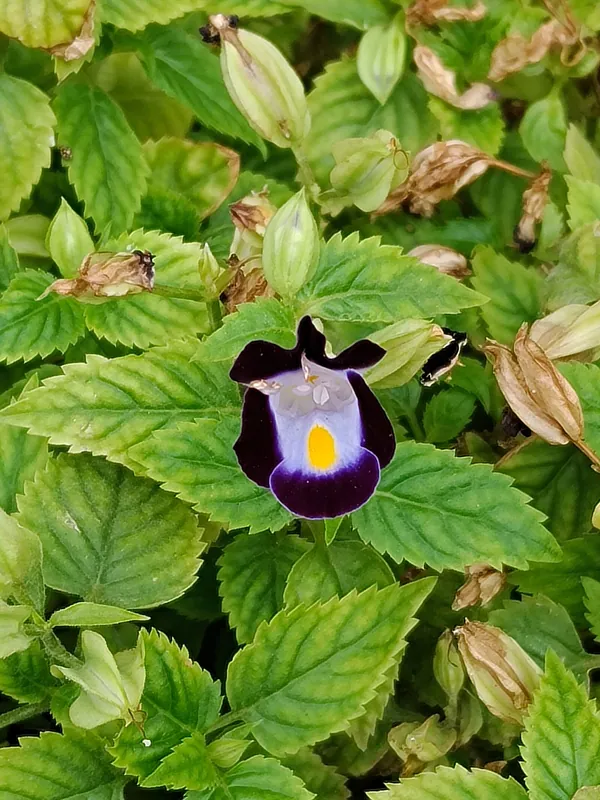

Wishbone Flower
Torenia fournieri
Also known as: Torenia
Standard horticultural guidance
- ☀️SunShade
- 💧WaterModerate water
- 🪴SpaceSmall pot
- ⭐CareEasy care
- 📅SeasonFeb–Sep
- 🛡️SafetyNot yet verified
Monsoon colour for shady pots.
Plant profile
| Common name | Wishbone Flower |
|---|---|
| Botanical name | Torenia fournieri |
| Family | Linderniaceae |
| Category | Flowering plants › Seasonal annuals – summer and monsoon |
| Plant type | Torenia |
| Growth habit | Herbaceous plant |
| Origin | Introduced to India – Tropical Asia and Africa |
| Sunlight | Shade or indirect light |
| Watering | Check the soil first: water when the top 2–3 cm (one finger joint) is dry. In pots that is usually every 2–3 days in summer and once a week in winter. |
| Soil | Rich, moist soil with plenty of organic matter |
| Where it grows | Indoors, Balcony, Terrace, Open ground (backyard / farm) |
| Pot or space needed | 10–12 inch pot |
| Mature size | About 1–2 ft (30–60 cm) |
| Propagation | Seeds, cuttings |
| Flowering | Jun–Nov |
| Care difficulty | Easy |
| Child & pet safety | No known toxicity, but not yet verified against a toxicity list – keep it away from small children and pets |
| Uses | Edging, hanging |
| Best season | Grow Feb–Sep (summer & monsoon) |
Where in India it grows well
| Telangana and Rayalaseema | ✖ Not recommended |
|---|---|
| Coastal Andhra Pradesh and Odisha | ✔ Grows well |
| Karnataka plateau (Bengaluru, Mysuru) | ◐ Possible with extra care |
| Tamil Nadu plains | ✔ Grows well |
| Kerala and the Konkan–Malabar coast | ✔ Grows well |
| Maharashtra (Mumbai coast, Pune, Vidarbha) | ✔ Grows well |
| Delhi and the northern plains | ✖ Not recommended |
| Hill stations (Ooty, Kodaikanal, Shimla, Darjeeling) | ✔ Grows well |
About this plant
Where it is grown: Grown worldwide as a bedding plant.
History: Named after Swedish clergyman Olof Torén.
Did you know? The stamens form a wishbone shape inside each flower.
Cold tolerance: Prefers warmth; protect from cold.
Why grow it: Colour for shady pots in the rainy season.
Sources and review
- Standard horticultural guidance for Indian conditions – Compiled by SAIPAL from general practice published by ICAR institutes and state agricultural universities
- Plant photographs and taxonomy pages – Wikimedia Commons
Not yet reviewed by an outside expert. Content prepared by SAIPAL; corrections are welcome through the Feedback page.