 SAIPAL PLANT PROFILER™
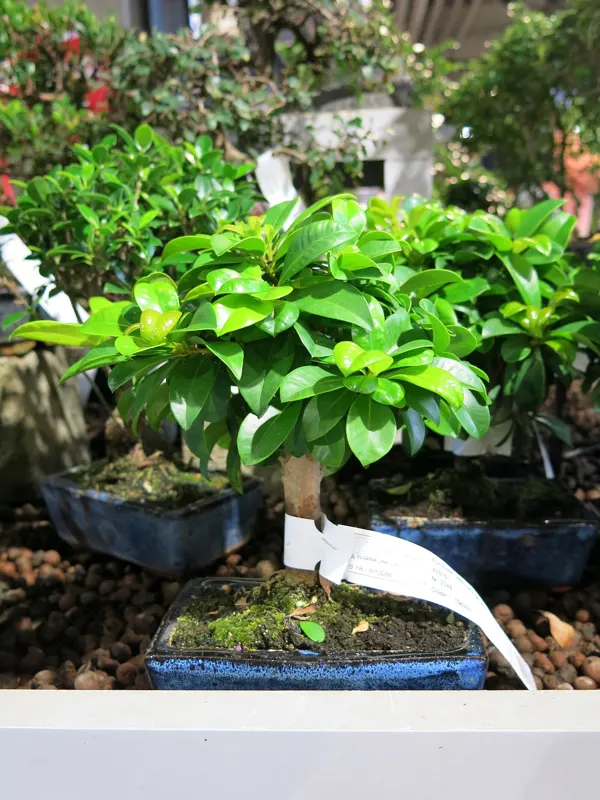

Surinam Cherry
Eugenia uniflora
Standard horticultural guidance
- ☀️SunSun to part sun
- 💧WaterModerate water
- 🪴SpaceSmall pot
- ⭐CareModerate care
- 📅SeasonAll year
- 🛡️SafetyChild & pet safe
White flowers, ribbed red cherries and bronze new leaves.
Plant profile
| Common name | Surinam Cherry |
|---|---|
| Botanical name | Eugenia uniflora |
| Family | Myrtaceae |
| Category | Fruit plants › Berries and small fruits |
| Plant type | Surinam cherry |
| Growth habit | Shrub |
| Origin | Introduced to India – Eastern South America, especially Brazil |
| Sunlight | 4–6 hours of sun (morning sun is best) |
| Watering | Check the soil first: water when the top 2–3 cm (one finger joint) is dry. Bonsai pots dry fast: in summer this is often daily, in winter every 2–3 days. |
| Soil | Well-drained loamy soil with compost |
| Where it grows | Balcony, Terrace |
| Pot or space needed | 10–12 inch pot |
| Mature size | Kept small by pruning – usually 1–2 ft |
| Propagation | Seeds, cuttings |
| Flowering | Feb–Apr |
| Fruiting / harvest | Apr–Jun |
| Care difficulty | Moderate – regular feeding & pruning |
| Child & pet safety | Safe around children & pets |
| Uses | Edible, hedge, bonsai |
| Best season | All year · best planted Jun–Aug or Oct–Nov |
Where in India it grows well
| Telangana and Rayalaseema | ◐ Possible with extra care |
|---|---|
| Coastal Andhra Pradesh and Odisha | ✔ Grows well |
| Karnataka plateau (Bengaluru, Mysuru) | ✔ Grows well |
| Tamil Nadu plains | ✔ Grows well |
| Kerala and the Konkan–Malabar coast | ✔ Grows well |
| Maharashtra (Mumbai coast, Pune, Vidarbha) | ✔ Grows well |
| Delhi and the northern plains | ✖ Not recommended |
| Hill stations (Ooty, Kodaikanal, Shimla, Darjeeling) | ✖ Not recommended |
About this plant
Where it is grown: Grown in tropical gardens worldwide; common in Kerala and Goa.
History: Portuguese traders carried it from Brazil to India and Africa.
Did you know? The fruit changes from green to orange to deep red as it ripens.
Cold tolerance: Keep it above 5°C; it prefers warm nights.
Why grow it: Small leaves, flowers, fruit and colourful new growth – four seasons of interest in one tree.
Varieties and cultivars (2)
| Name | Type | What it is like | Where it is grown | Status |
|---|---|---|---|---|
| Red Pitanga | Cultivar group | Common red-fruited form | All India | Standard horticultural guidance |
| Black Pitanga | Cultivar group | Dark purple-black fruit, sweeter | Nurseries | Needs verification |
Sources and review
- Standard horticultural guidance for Indian conditions – Compiled by SAIPAL from general practice published by ICAR institutes and state agricultural universities
- Plant photographs and taxonomy pages – Wikimedia Commons
Not yet reviewed by an outside expert. Content prepared by SAIPAL; corrections are welcome through the Feedback page.