 SAIPAL PLANT PROFILER™
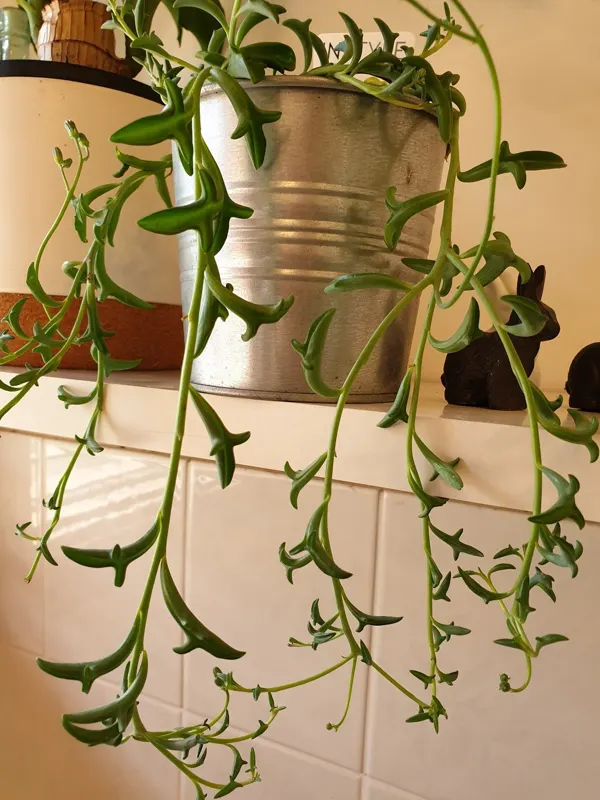

String of Dolphins
Curio × peregrinus
Standard horticultural guidance
- ☀️SunBright indirect
- 💧WaterLow water
- 🪴SpaceSmall pot
- ⭐CareModerate care
- 📅SeasonAll year
- 🛡️SafetyMildly toxic
Trailing leaves shaped like leaping dolphins.
Plant profile
| Common name | String of Dolphins |
|---|---|
| Botanical name | Curio × peregrinus |
| Family | Asteraceae |
| Category | Indoor and foliage plants › Trailing and hanging plants |
| Plant type | String of pearls |
| Growth habit | Succulent |
| Origin | Garden hybrid or cultivated selection |
| Sunlight | Bright light, no harsh sun |
| Watering | Check the soil first: water only when the top 5 cm (two finger joints) is dry. In pots that is usually every 10–14 days in summer and every 3–4 weeks in winter; almost none in the monsoon. |
| Soil | Gritty, very free-draining mix (sand, grit, little compost) |
| Where it grows | Indoors, Balcony |
| Pot or space needed | 6–8 inch pot or seed tray |
| Mature size | Usually under 1 ft (30 cm) |
| Propagation | Cuttings |
| Care difficulty | Moderate – regular feeding & pruning |
| Child & pet safety | Mildly toxic or irritant if chewed – keep out of reach |
| Uses | Hanging |
| Best season | All year · best planted Jun–Aug or Oct–Nov |
Where in India it grows well
| Telangana and Rayalaseema | ✔ Grows well |
|---|---|
| Coastal Andhra Pradesh and Odisha | ◐ Possible with extra care |
| Karnataka plateau (Bengaluru, Mysuru) | ✔ Grows well |
| Tamil Nadu plains | ✔ Grows well |
| Kerala and the Konkan–Malabar coast | ◐ Possible with extra care |
| Maharashtra (Mumbai coast, Pune, Vidarbha) | ✔ Grows well |
| Delhi and the northern plains | ◐ Possible with extra care |
| Hill stations (Ooty, Kodaikanal, Shimla, Darjeeling) | ✔ Grows well |
Sources and review
- Standard horticultural guidance for Indian conditions – Compiled by SAIPAL from general practice published by ICAR institutes and state agricultural universities
- Plant photographs and taxonomy pages – Wikimedia Commons
Not yet reviewed by an outside expert. Content prepared by SAIPAL; corrections are welcome through the Feedback page.