 SAIPAL PLANT PROFILER™
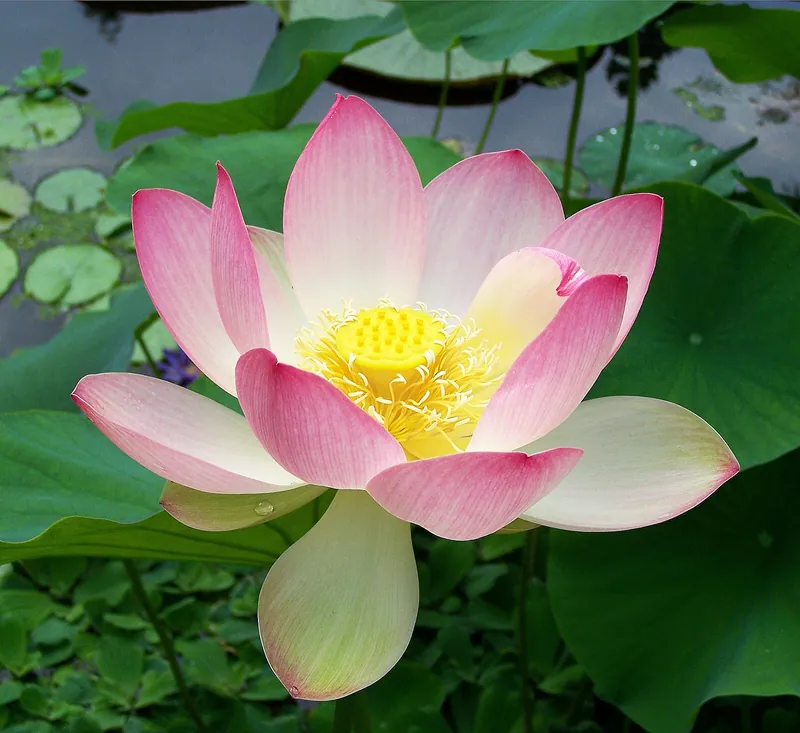

Sacred Lotus
Nelumbo nucifera
Also known as: Kamal (Hindi) · Thamara (Telugu) · Thamarai (Tamil) · Tavare (Kannada) · Thamara (Malayalam) · Kamal (Marathi)
Standard horticultural guidance
- ☀️SunFull sun
- 💧WaterHigh water
- 🪴SpaceMedium pot
- ⭐CareModerate care
- 📅SeasonFeb–Sep
- 🛡️SafetyChild & pet safe
Iconic sacred flower; grows in a wide water tub with six hours of sun.
Plant profile
| Common name | Sacred Lotus |
|---|---|
| Botanical name | Nelumbo nucifera |
| Family | Nelumbonaceae |
| Category | Aquatic and bog plants › Water lilies and lotus |
| Plant type | Lotus |
| Growth habit | Aquatic plant |
| Origin | Native to India – Tropical Asia and northern Australia |
| Sunlight | 6+ hours of direct sun |
| Watering | Grows in a water tub – keep the water 10–15 cm above the soil and top it up every few days in summer |
| Soil | Heavy clay loam under standing water |
| Where it grows | Balcony, Terrace, Open ground (backyard / farm) |
| Pot or space needed | 14–18 inch pot or grow bag |
| Mature size | About 2–4 ft (0.6–1.2 m) |
| Propagation | Rhizomes, seeds |
| Flowering | Apr–Sep |
| Fruiting / harvest | Jul–Oct |
| Care difficulty | Moderate – regular feeding & pruning |
| Child & pet safety | Safe around children & pets |
| Uses | Worship, ornamental, edible |
| Best season | Grow Feb–Sep (summer & monsoon) |
Where in India it grows well
| Telangana and Rayalaseema | ✔ Grows well |
|---|---|
| Coastal Andhra Pradesh and Odisha | ✔ Grows well |
| Karnataka plateau (Bengaluru, Mysuru) | ✔ Grows well |
| Tamil Nadu plains | ✔ Grows well |
| Kerala and the Konkan–Malabar coast | ✔ Grows well |
| Maharashtra (Mumbai coast, Pune, Vidarbha) | ✔ Grows well |
| Delhi and the northern plains | ✔ Grows well |
| Hill stations (Ooty, Kodaikanal, Shimla, Darjeeling) | ✔ Grows well |
About this plant
Where it is grown: Grown in India (its national flower), China, Vietnam and Japan.
History: Sacred in Hinduism and Buddhism for thousands of years.
Did you know? Its leaves repel water so well that it inspired self-cleaning materials – the "lotus effect".
Cold tolerance: Goes dormant in cold weather; regrows in spring.
Why grow it: A stunning water plant with deep cultural meaning.
Varieties and cultivars (6)
| Name | Type | What it is like | Where it is grown | Status |
|---|---|---|---|---|
| Single pink | Cultivar group | Traditional pink lotus | All India | Standard horticultural guidance |
| Single white | Cultivar group | White lotus (Pundarika) | All India | Standard horticultural guidance |
| Bowl lotus (micro lotus) | Cultivar group | Small varieties for bowls and tubs | Nurseries | Standard horticultural guidance |
| Double (Sahasradal) | Cultivar group | Many-petalled lotus | Nurseries | Needs verification |
| Shweta (White) | Cultivar group | White lotus of temple tanks | All India | Needs verification |
| Lotus root types (Renkon) | Cultivar group | Varieties grown mainly for edible rhizomes | Kashmir, Manipur | Standard horticultural guidance |
Sources and review
- Standard horticultural guidance for Indian conditions – Compiled by SAIPAL from general practice published by ICAR institutes and state agricultural universities
- Plant photographs and taxonomy pages – Wikimedia Commons
Not yet reviewed by an outside expert. Content prepared by SAIPAL; corrections are welcome through the Feedback page.