 SAIPAL PLANT PROFILER™
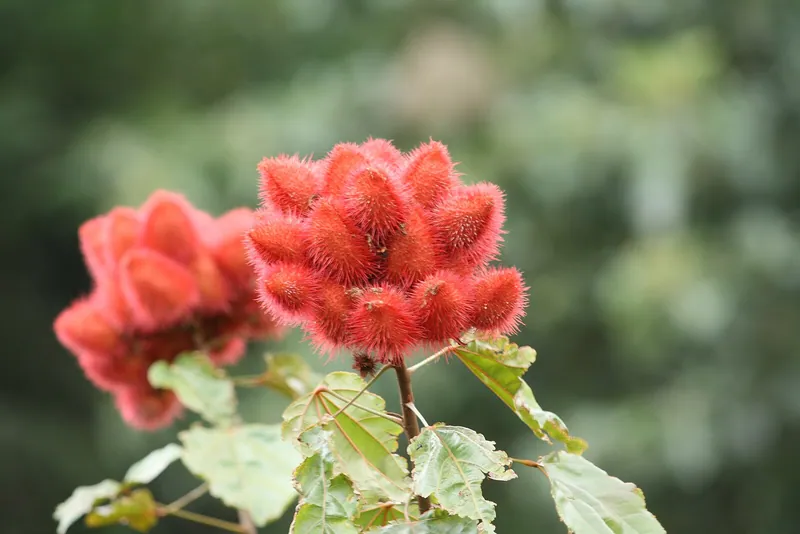

Lipstick Tree
Bixa orellana
Also known as: Annatto · Sinduri (Hindi) · Jaffra (Telugu) · Kurangu manjal (Tamil)
Standard horticultural guidance
- ☀️SunFull sun
- 💧WaterModerate water
- 🪴SpaceLarge tub
- ⭐CareEasy care
- 📅SeasonAll year
- 🛡️SafetyNot yet verified
Pink flowers and red seed pods used as natural colour.
Plant profile
| Common name | Lipstick Tree |
|---|---|
| Botanical name | Bixa orellana |
| Family | Bixaceae |
| Category | Trees › Flowering trees |
| Plant type | Bixa |
| Growth habit | Tree |
| Origin | Introduced to India – Tropical Central and South America |
| Sunlight | 6+ hours of direct sun |
| Watering | Check the soil first: water when the top 2–3 cm (one finger joint) is dry. In pots that is usually every 2–3 days in summer and once a week in winter. |
| Soil | Well-drained loamy soil with compost |
| Where it grows | Terrace, Open ground (backyard / farm) |
| Pot or space needed | 20–24 inch tub or large grow bag |
| Mature size | About 4–10 ft (1.2–3 m) |
| Propagation | Seeds, cuttings |
| Flowering | Sep–Nov |
| Fruiting / harvest | Nov–Feb |
| Care difficulty | Easy |
| Child & pet safety | No known toxicity, but not yet verified against a toxicity list – keep it away from small children and pets |
| Uses | Natural dye, ornamental |
| Best season | All year · best planted Jun–Aug or Oct–Nov |
Where in India it grows well
| Telangana and Rayalaseema | ✔ Grows well |
|---|---|
| Coastal Andhra Pradesh and Odisha | ✔ Grows well |
| Karnataka plateau (Bengaluru, Mysuru) | ✔ Grows well |
| Tamil Nadu plains | ✔ Grows well |
| Kerala and the Konkan–Malabar coast | ✔ Grows well |
| Maharashtra (Mumbai coast, Pune, Vidarbha) | ✔ Grows well |
| Delhi and the northern plains | ✔ Grows well |
| Hill stations (Ooty, Kodaikanal, Shimla, Darjeeling) | ✖ Not recommended |
About this plant
Where it is grown: Grown across Latin America, Africa and South Asia.
History: Indigenous peoples of the Amazon used its seeds as body paint for centuries.
Did you know? Its seeds give annatto, the natural orange food colour used in cheese and snacks worldwide.
Cold tolerance: Prefers warmth; dislikes nights below 12°C.
Why grow it: Pretty pink flowers and fascinating natural colour pods children love.
Sources and review
- Standard horticultural guidance for Indian conditions – Compiled by SAIPAL from general practice published by ICAR institutes and state agricultural universities
- Plant photographs and taxonomy pages – Wikimedia Commons
Not yet reviewed by an outside expert. Content prepared by SAIPAL; corrections are welcome through the Feedback page.