 SAIPAL PLANT PROFILER™
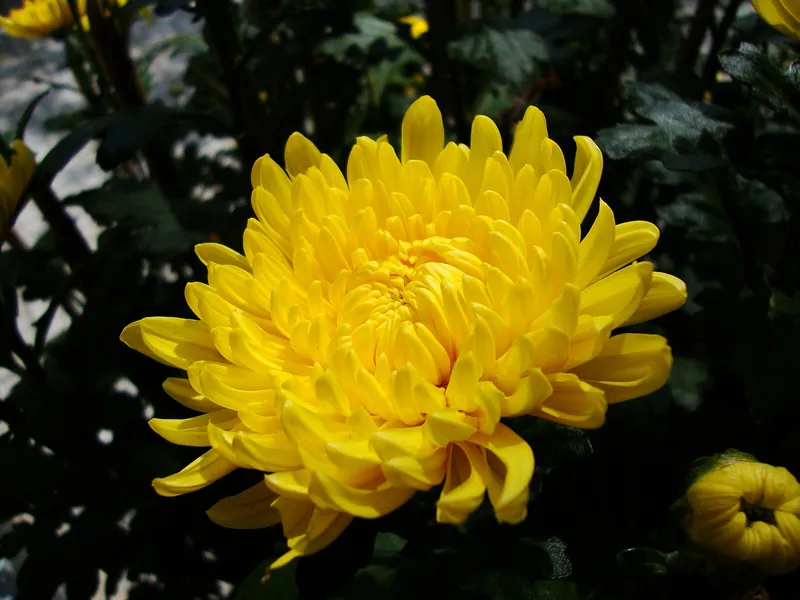

Chrysanthemum
Chrysanthemum × morifolium
Also known as: Guldaudi (Hindi) · Chamanthi (Telugu) · Samanthi (Tamil) · Sevanthige (Kannada) · Shevanti (Marathi)
Standard horticultural guidance
- ☀️SunFull sun
- 💧WaterModerate water
- 🪴SpaceMedium pot
- ⭐CareModerate care
- 📅SeasonOct–Feb
- 🛡️SafetyChild & pet safe
Classic autumn and winter flower for decoration.
Plant profile
| Common name | Chrysanthemum |
|---|---|
| Botanical name | Chrysanthemum × morifolium (also listed as Chrysanthemum morifolium; often sold as C. indicum) |
| Family | Asteraceae |
| Category | Flowering plants › Cut flowers |
| Plant type | Chrysanthemum |
| Growth habit | Herbaceous plant |
| Origin | Garden hybrid or cultivated selection – China and East Asia |
| Sunlight | 6+ hours of direct sun |
| Watering | Check the soil first: water when the top 2–3 cm (one finger joint) is dry. In pots that is usually every 2–3 days in summer and once a week in winter. |
| Soil | Well-drained loamy soil with compost |
| Where it grows | Balcony, Terrace, Open ground (backyard / farm) |
| Pot or space needed | 14–18 inch pot or grow bag |
| Mature size | About 2–4 ft (0.6–1.2 m) |
| Propagation | Cuttings, suckers |
| Flowering | Oct–Jan |
| Care difficulty | Moderate – regular feeding & pruning |
| Child & pet safety | Safe around children & pets · Pets: Listed as toxic to cats and dogs (ASPCA plant list) |
| Uses | Worship, cut flowers, garlands |
| Best season | Grow Oct–Feb (cool season) |
Where in India it grows well
| Telangana and Rayalaseema | ✔ Grows well |
|---|---|
| Coastal Andhra Pradesh and Odisha | ✔ Grows well |
| Karnataka plateau (Bengaluru, Mysuru) | ✔ Grows well |
| Tamil Nadu plains | ✔ Grows well |
| Kerala and the Konkan–Malabar coast | ✔ Grows well |
| Maharashtra (Mumbai coast, Pune, Vidarbha) | ✔ Grows well |
| Delhi and the northern plains | ✔ Grows well |
| Hill stations (Ooty, Kodaikanal, Shimla, Darjeeling) | ✔ Grows well |
About this plant
Where it is grown: Grown worldwide; Japan, China and the Netherlands are leading producers.
History: Cultivated in China since the 15th century BC; symbol of Japan's imperial family.
Did you know? Its flowering is triggered by longer nights.
Cold tolerance: Loves cool nights – they trigger flowering.
Why grow it: Abundant autumn and winter colour.
Varieties and cultivars (16)
| Name | Type | What it is like | Where it is grown | Status |
|---|---|---|---|---|
| Pusa Anmol | Released variety | IARI pompon type | North India | Standard horticultural guidance |
| Pusa Centenary | Released variety | IARI variety for garlands | North India | Needs verification |
| Ajay | Released variety | Small-flowered garland type | North India | Needs verification |
| Paper White | Cultivar | White small-flowered type for garlands | South India | Standard horticultural guidance |
| Shanthi (white) | Cultivar | White garland chrysanthemum of Karnataka | Karnataka | Needs verification |
| Co 1 | Released variety | TNAU yellow chrysanthemum | Tamil Nadu | Standard horticultural guidance |
| Indira | Released variety | IIHR yellow garland chrysanthemum | Karnataka | Standard horticultural guidance |
| Red Gold | Released variety | IIHR variety | Karnataka | Needs verification |
| Kasturi | Cultivar | Yellow garland type of Tamil Nadu | Tamil Nadu | Needs verification |
| Spray chrysanthemums | Cultivar group | Many small flowers per stem for bouquets | Polyhouse | Standard horticultural guidance |
| Standard (large) chrysanthemums | Cultivar group | One huge bloom per stem, disbudded | All India | Standard horticultural guidance |
| Pompon | Cultivar group | Small round blooms | All India | Standard horticultural guidance |
| Button types | Cultivar group | Tiny button-shaped flowers | All India | Standard horticultural guidance |
| Pusa Aditya | Released variety | IARI chrysanthemum | North India | Needs verification |
| Pusa Kesari | Released variety | IARI chrysanthemum | North India | Needs verification |
| Marigold-type (Jayanthi) | Cultivar group | Small yellow worship chrysanthemums | South India | Needs verification |
Sources and review
- Standard horticultural guidance for Indian conditions – Compiled by SAIPAL from general practice published by ICAR institutes and state agricultural universities
- Toxic and Non-Toxic Plant List – Dogs and Cats – ASPCA Animal Poison Control Center
- Plant photographs and taxonomy pages – Wikimedia Commons
Not yet reviewed by an outside expert. Content prepared by SAIPAL; corrections are welcome through the Feedback page.